 Institute
Established in 1999, as a Centre of Excellence in Information Technology and allied areas, the IIIT-A was conferred the Deemed University status by Govt. of India in the year 2000.
 Academics
With an enduring dedication to the pursuit of excellence, IIIT-A offers unparalleled students experiences across a broad spectrum of academic and research endeavours.
 People
The growth of an Institute depends on the dedication and hard work of all the stakeholders. IIITA has a fantastic combination of Faculty, Administrative Officers, and teaching and non-teaching staff who take care a diverse range of issues including human resources, financial activities, research ad
 Student Corner
Students are the most dynamic fraternity of the institute. They are always eager to make their mark in the world. Since its inception, IIITA has earned a worldwide reputation in fostering young minds to become successful and highly valued individuals.
 Resources
The feature of a good society is to have a well organised support system for all possible needs. IIITA offers a comprehensive set of functionaries taking care of all of its community.

Published on 14th May, 2026
2026
29
June
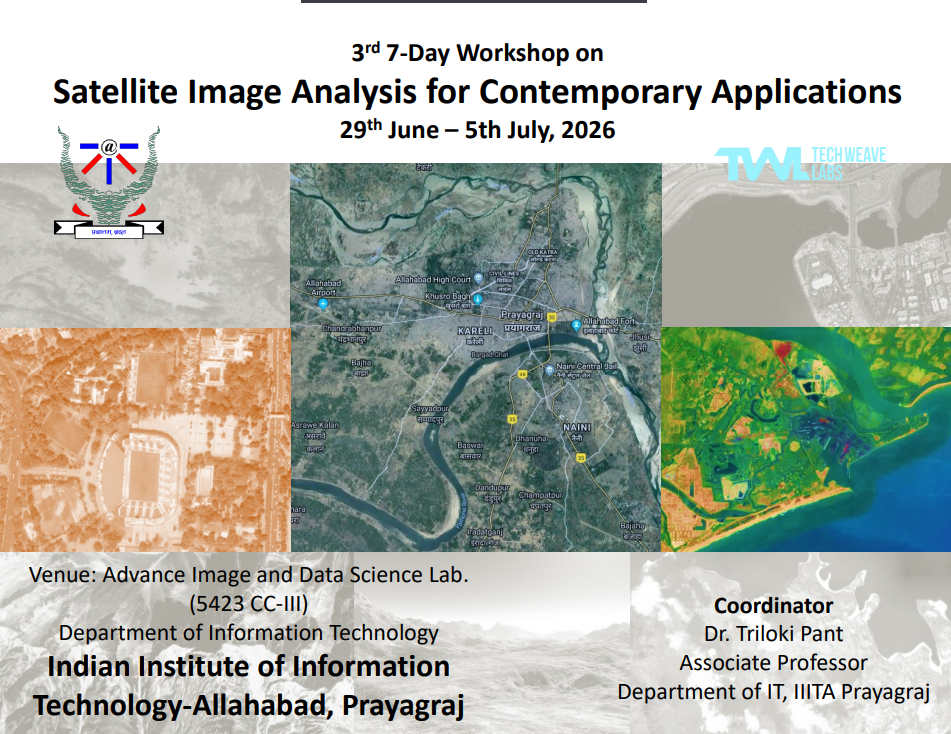
Satellite Image Processing is a prominent field of research and development that has attracted researchers' interest over the past few decades. There are various applications where satellite imaging is the only tool to produce effective results, e.g., land cover mapping, deforestation maps, urban area growth, flood mapping, etc., since satellite imagery can monitor large geographical areas. India has a long history of satellite missions, which were successfully operated in the past and continue to operate with a larger number of satellites every year. This shows the strength of our country in satellite missions and, thus, the satellite imaging system, which is as rich as that of any other country. Accordingly, a variety of satellite data is now available in the country for research purposes. The digital image processing and analysis techniques applied to the satellite images produce very useful information that can be utilized for various land cover applications. The proposed program is for beginners to learn the basics of satellite image processing and analysis tools effectively by providing exposure to various tools and discussing contemporary problems for future research. Registration Link: https://apply.iiita.ac.in/event/register/WSIACA/
Published on 01st Apr, 2026
2026
19
June
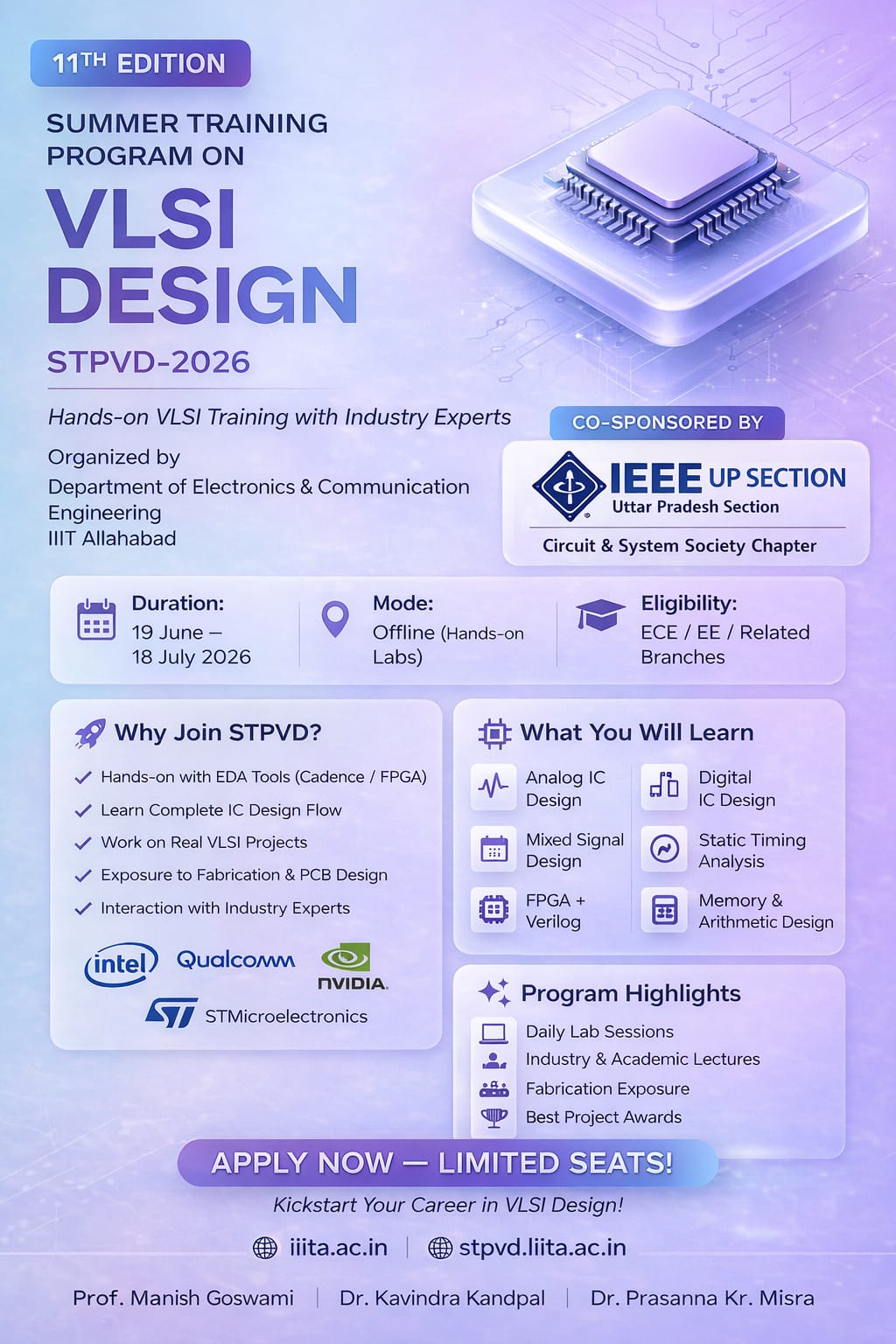
The rapid advancement in VLSI technology and system integration has enabled the design of chips with more than a billion transistors. A specialized one-month summer training program from 19th June to 18th July 2026 has been scheduled at IIIT-A. The 11th edition of STPVD 2026 is technically co-sponsored by IEEE Circuit and System Society, Chapter UP Section. This training program will cover analog and digital integrated circuit design using commercial technology kits and simulation tools, and exposure to fabrication methods and PCB design. Experts from Industry and academia shall train the registered applicants.
Published on 21st Feb, 2026
2026
16
June
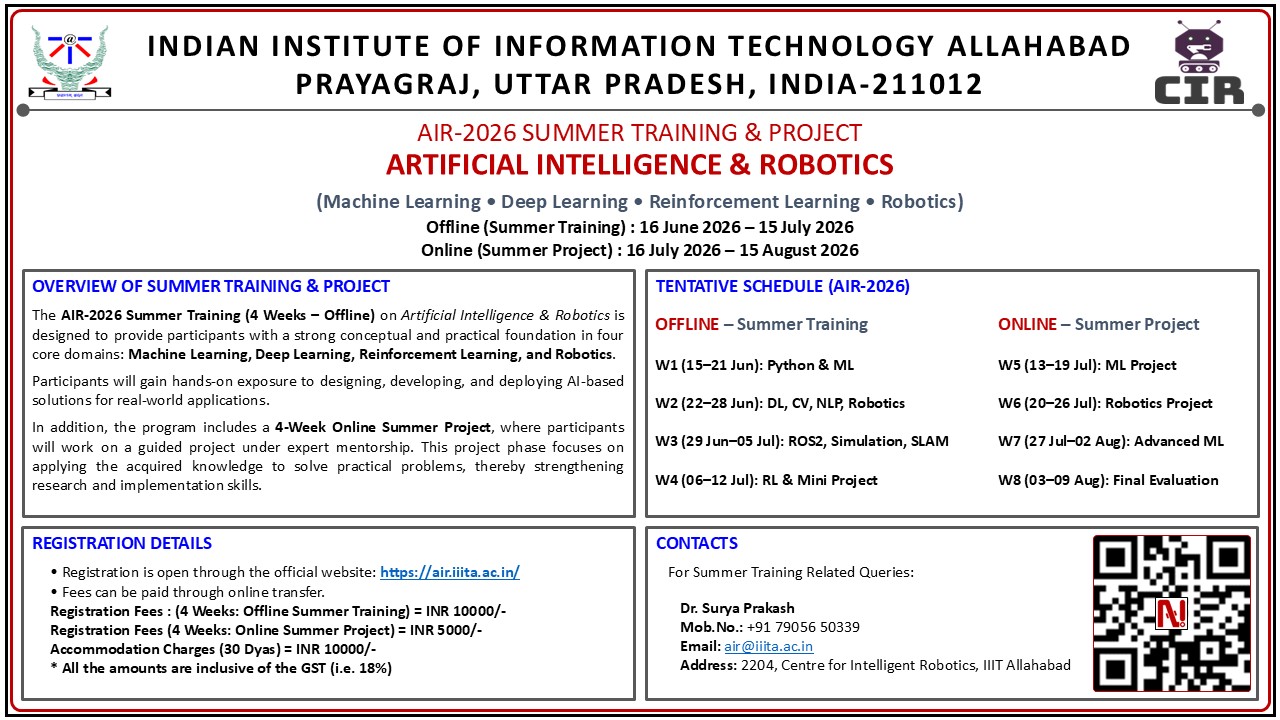
This comprehensive program takes you on a journey through the theoretical foundations and practical applications of Artificial Intelligence, equipping you with the skills and knowledge in high demand across industries.
Published on 18th Mar, 2026
2026
15
June
The rapid advancement of Artificial Intelligence (AI) and Deep Learning (DL) has significantly transformed various sectors, including computer vision, healthcare, finance, transportation, manufacturing, and education. To harness this transformative potential, it is essential to equip young researchers and students with advanced knowledge and hands-on skills in Deep Learning.
Published on 06th May, 2026
2026
15
June
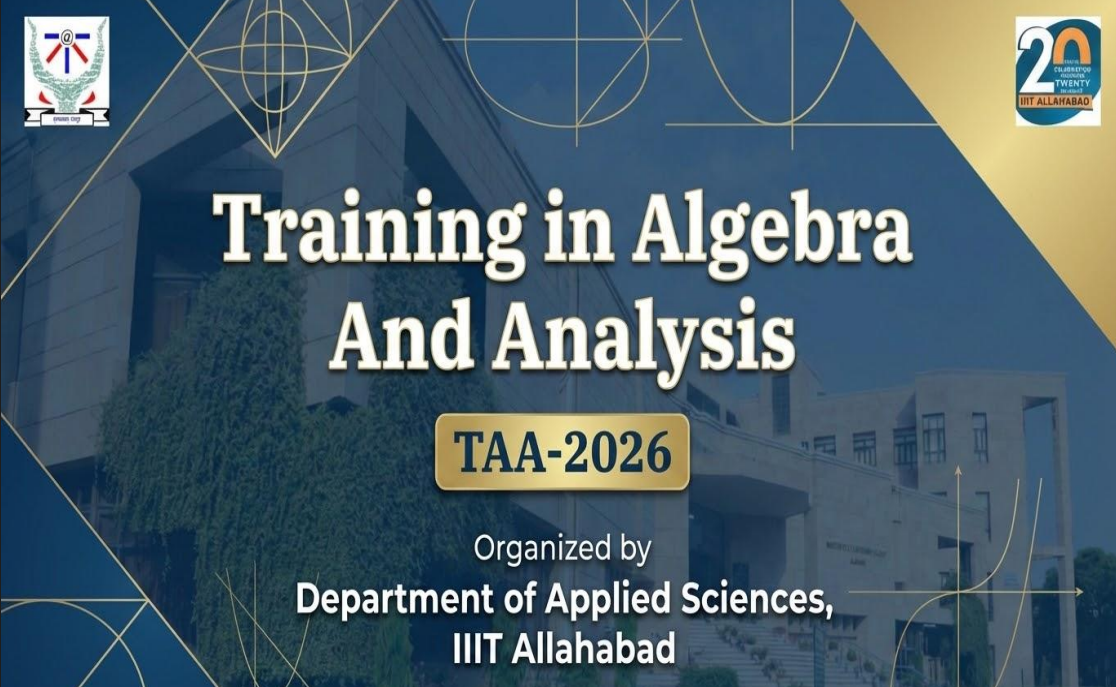
About the workshop: Algebra and Analysis are two fundamental pillars of Mathematics, forming the foundation of numerous advanced areas with significant applications across almost all disciplines in which Mathematics is involved. The main aim of this training program is to provide students with a comprehensive understanding of fundamental concepts and applications of algebra and analysis through a series of structured lectures, interactive discussions, and collaborative problem-solving sessions, and prepare them for competitive exams such as JAM, NET, GATE, and NBHM Fellowship.
Published on 18th Mar, 2026
2026
01
June
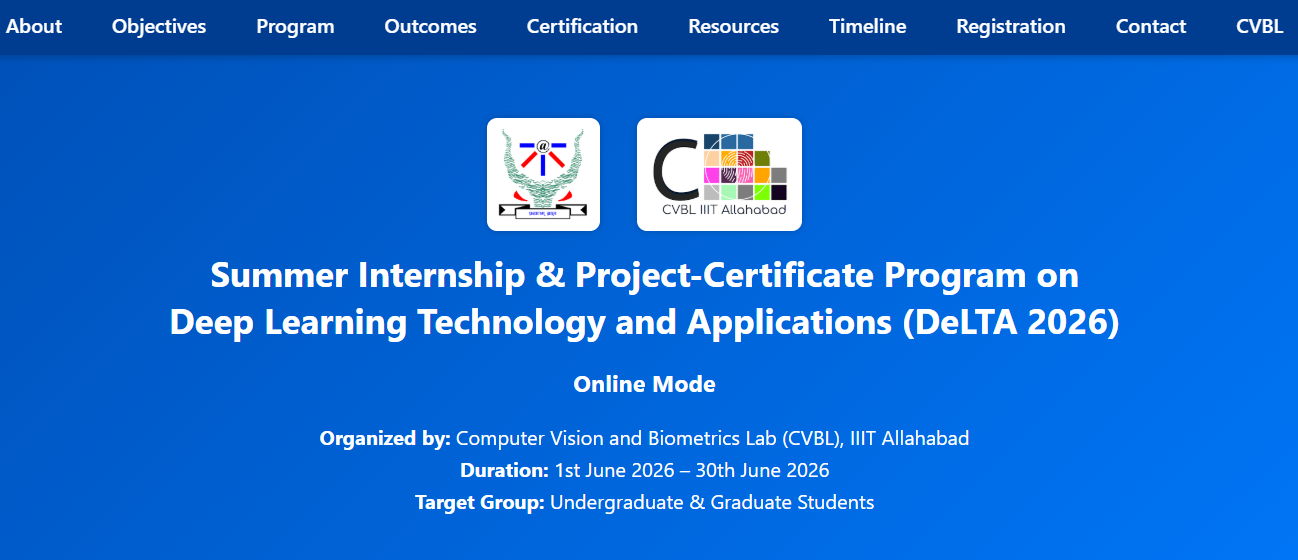
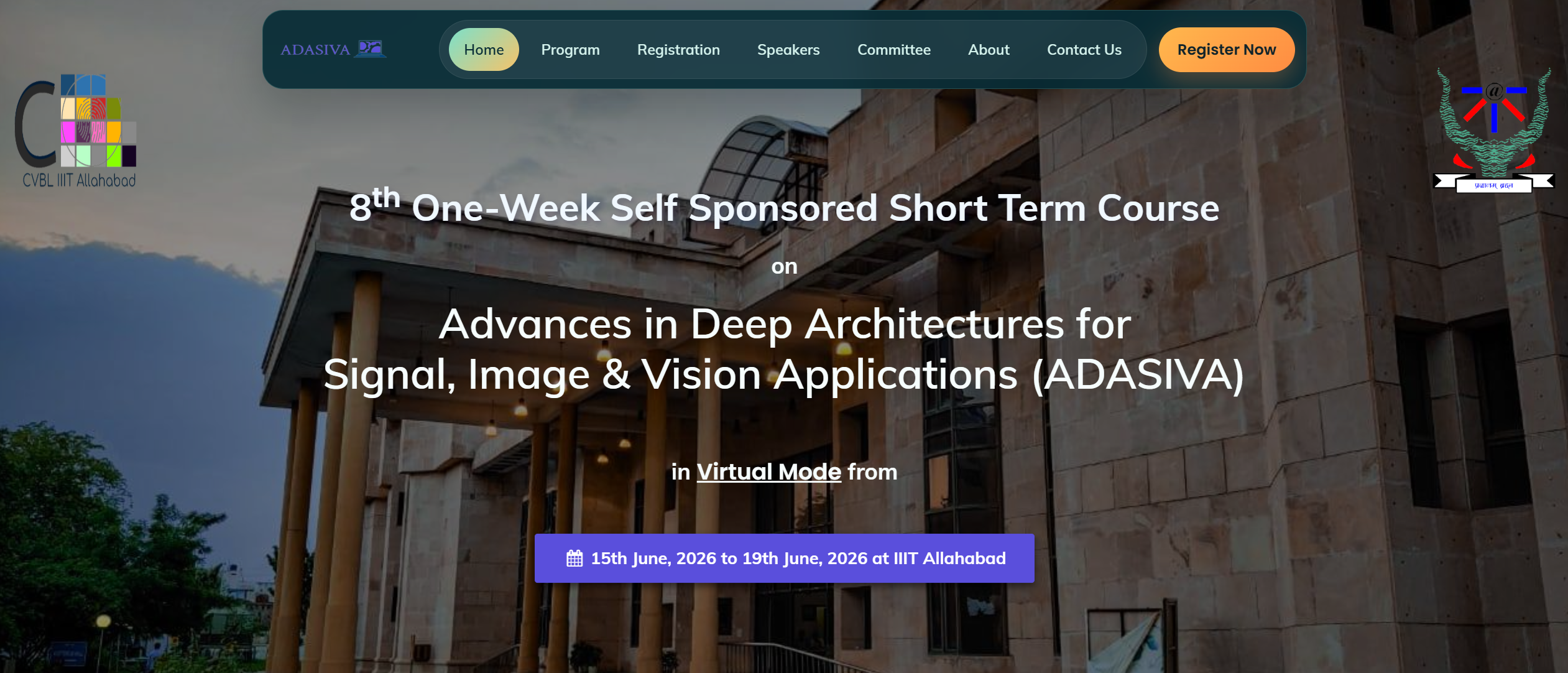
ADASIVA is an annual short-term course organized by the Computer Vision and Biometrics Lab. The course will be useful for PG and PhD Students and Young Professionals working with recent state-of-the-art methods in AI/ML/DL for a variety of applications in signal, image, and biometric processing, and will address how these approaches can be applied to real-world research problems. The course covers the essentials of machine learning and deep neural networks, as well as other models and their applications to practical problems in signal, image, and computer vision.
Published on 26th Mar, 2026
2026
31
May
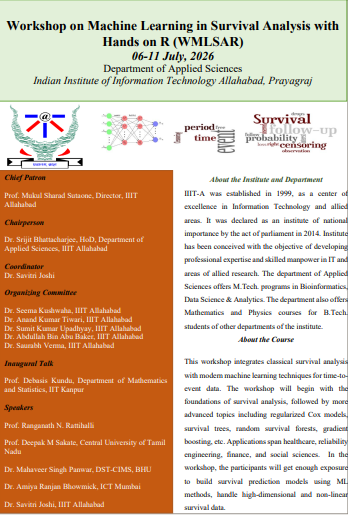
The Department of Applied Sciences, Indian Institute of Information Technology Allahabad (IIIT-A) is going to organise a workshop on Machine Learning in Survival Analysis with Hands-on R during July 06-11, 2026. This workshop integrates classical survival analysis with modern machine learning techniques for time-to-event data. Topics include regularized Cox models, survival trees, random survival forests, gradient boosting. Applications span healthcare, reliability engineering, finance, and social sciences. In the workshop, the participants will get enough exposure to build survival prediction models using ML methods, handle high-dimensional and non-linear survival data.
Contact | RTI | Anti-Ragging Info | NetPolicy | Disclaimer | SC/ST Complaint | Developers | Sitemap
Indian Institute of Information Technology Allahabad
Devghat, Jhalwa, Prayagraj-211015, U. P. INDIA
Phone: 91-532-2922000, Fax: 91-532-2922125, Email: contact@iiita.ac.in